The 15-Minute Weekly Money Check-In: A Simple Routine That Sticks
A weekly money check-in takes 15 minutes and keeps surprises small. Here's the simple five-step routine, what to look at, and how to make it stick for good.
Key points: A weekly money check-in is a short, repeatable routine that catches small problems before they grow. Five steps, 15 minutes, one reminder.
Who it's for: You, if you've got the basics started (a budget, some savings) but money still feels like something that happens to you.
What you'll walk away with: A ready-to-use routine, what to look at each week, and how to make the habit stick.
Have you ever opened your banking app, felt your stomach drop, and closed it again? Most money stress doesn't come from one big mistake. It comes from not looking, and then being surprised.
A weekly money check-in fixes that. It's 15 minutes, once a week, where you look at your money on purpose, calmly, before it has a chance to surprise you. No spreadsheets required.
Why a Weekly Check-In Works
A monthly review sounds tidy, but a month is long enough for a forgotten subscription to renew twice or for an overdraft fee to land. A daily review is too much for most busy lives. Weekly is the sweet spot: often enough to catch problems while they're small, rare enough to keep.
It also changes how money feels. When you look regularly, the numbers stop being scary. They become information. And information is something you can act on.
Before You Start: Set Up Your Check-In
Do this once, and every week after gets easier.
Pick your time. Sunday morning with coffee, Friday at lunch, Monday before work. Choose a time you're rarely interrupted.
Set a recurring reminder. Put it on your calendar as a real appointment, with a name you like, such as "Money Date" or "15 for Future Me."
Gather your tools. Your bank app, any credit card apps, and one place to write things down: a notebook, a notes app, or a simple budgeting app.
If you'd like an app to pull your accounts into one view, compare a few on monthly cost, which banks they connect to, and how easy they make it to sort your spending into categories. A notebook works just as well.
Man doing his weekly money check-in on a park bench during his Friday lunch break
The 15-Minute Routine, Step by Step
Step 1: Check your balances (2 minutes)
Look at checking, savings, and any credit card balances. Write down three numbers: what you have, what you owe, and whether checking can cover the bills due this week. You're not judging the numbers. You're just meeting them.
Step 2: Scan last week's spending (4 minutes)
Scroll through last week's transactions. Look for three things:
Anything you don't recognize. Catching a wrong charge early makes it much easier to dispute.
Surprise subscriptions. Free trials that turned into paid plans tend to hide here.
One pattern. Maybe takeout crept up during a busy week. Notice it without beating yourself up.
If you use a budget, a plan for where your money goes each month, compare what you spent in each category to what you planned. Close is good enough.
Step 3: Look at the week ahead (3 minutes)
Check what's coming in the next seven days: bills, paydays, a birthday, a school fee, a car registration. Seeing it now means you can move money ahead of time instead of scrambling later.
Step 4: Move money toward one goal (3 minutes)
Make one transfer, even a small one, toward whatever matters most right now: your emergency fund (money set aside only for true surprises), a debt payment, or a savings goal. If you already have automatic transfers, just confirm they went through.
This is the step that turns looking into progress. Ten dollars moved on purpose builds the habit as much as a hundred.
Step 5: Write one win and one tweak (3 minutes)
Before you close the app, write two short lines:
One win: "Didn't touch my savings." "Cooked four nights." "Finally canceled that app."
One tweak for next week: "Pack lunch twice." "Call the internet company about my rate."
Over a few months, these notes become a record of how far you've come.
How to Make the Habit Stick
Pair it with something you enjoy. Your favorite coffee, a playlist, a sunny chair. The routine should feel like a small ritual, not a chore.
Keep it to 15 minutes. If something needs more time, write it down and schedule it separately. Protect the short version.
Miss a week? Just start again. One skipped week doesn't break the habit. Quitting does.
Do it together if you share money. Couples can split the steps and finish with the win and tweak out loud. It keeps money talk short, regular, and calm.
Review your notes once a month. Read back through four weeks of wins and tweaks. You'll spot the patterns worth fixing, and you'll see real proof that you're making progress, even in weeks that felt messy.
A red kitchen timer on a windowsill, set for a 15-minute weekly money check-in
Why This Is a Success Habit
At Infinite Investor, we build everything around The Seven Pillars of Personal Investment. This routine sits squarely in Success, which we define as vision made measurable. You can't steer toward a goal you never look at. Fifteen minutes a week is how a vague hope like "I want to be better with money" becomes something you can see moving.
Your Next Step
Right now, open your calendar and create a recurring 15-minute event for this week. Name it, set a reminder, and do your first check-in when it comes up. That's the whole assignment.
Once your check-in is running smoothly and your basics are steady, the next step is growing what comes in, not just managing it.
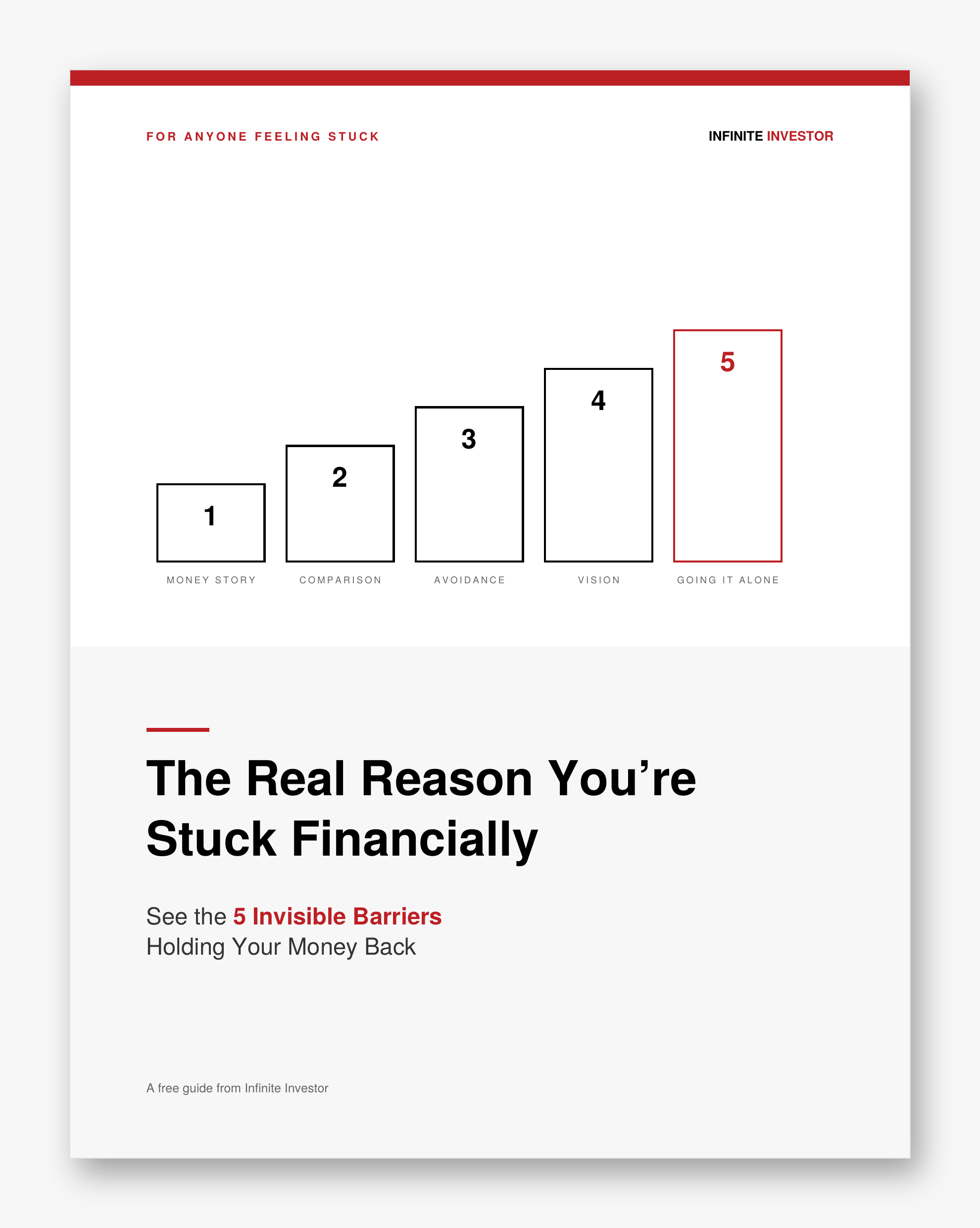
We put the whole framework into a free guide.The Real Reason You're Stuck Financially shows you what's really been holding you back, and how to get moving. Go get it, it takes five minutes to read and could save you a lot more than that.
This article is general education, not individual financial advice. For decisions about your personal situation, consider talking with a qualified, fee-only financial professional.